


Full Range of Industrial-Grade Stearates with High Purity & Excellent Dispersion
Chuangwei Minerals | Full Range of Industrial-Grade Stearates for Multiple Industries
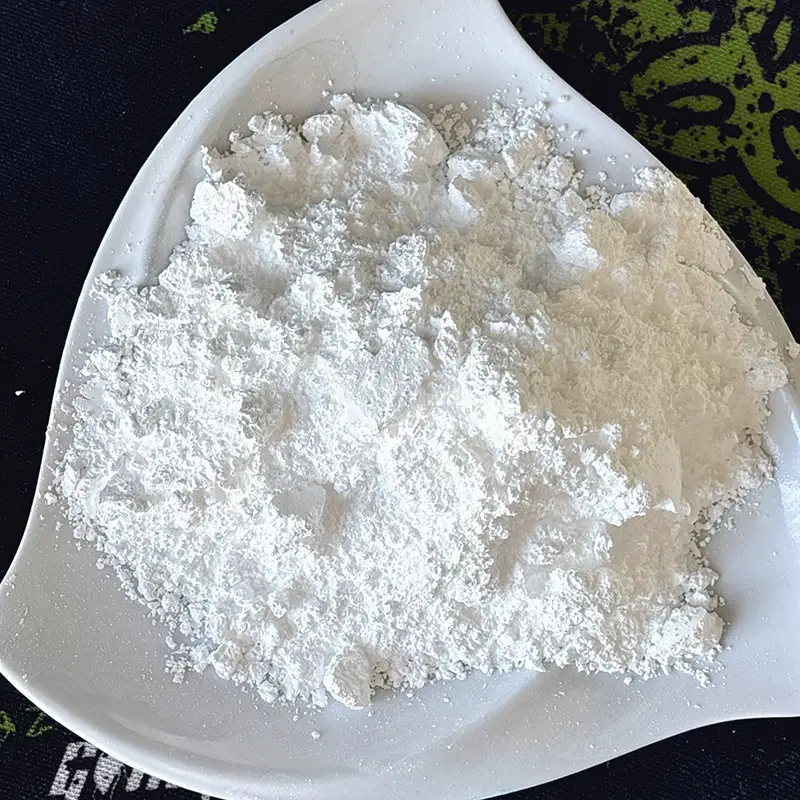
Zinc Stearate: This white, non-toxic, and slightly greasy powder is insoluble in water but soluble in organic solvents such as hot ethanol, turpentine, and benzene. When heated in organic solvents, it dissolves but coagulates upon cooling. It decomposes into stearic acid and corresponding zinc salts in strong acids. The compound is hygroscopic in air.
Applications: -As a non-toxic stabilizer in PVC resin processing-As a demolding agent for styrene, phenolic, and amino resins-As a softener and barrier in rubber compounds-As a texturing agent and paint leveling agent in textiles-In cosmetics for powder and face powder production-As a coating lubricant in paper manufacturing
5.0
design customization
Please fill out the form below to request a quote or to request more information about us. Please be sure to upload customized requirement documents or pictures, and we will get back to you as soon as possible with a response. we're ready to start working on your new project, contact us now to get started.
Please fill out the form below to request a quote or to request more information about us. please be as detailed as possible in your message, and we will get back to you as soon as possible with a response. we're ready to start working on your new project, contact us now to get started.
Calcium stearate
This white, light powder is insoluble in water, alcohol, and ether. It decomposes slowly when heated to 400°C and absorbs moisture in air. When exposed to strong acids, it breaks down into stearic acid and corresponding calcium salts. As a stabilizer and lubricant for polyvinyl chloride (PVC), calcium stearate exhibits synergistic effects when combined with zinc soaps and epoxides, enhancing thermal stability.
It is used in non-toxic food packaging materials and flexible film devices for medical equipment. In polyethylene and polypropylene, it acts as a halogen absorber, eliminating residual catalysts that affect resin color and stability. Additionally, it serves as a lubricant and release agent in polyester-reinforced plastics, phenolic resins, and amino resins, as well as a grease thickener. It is also widely used as a waterproofing agent for textiles and a leveling agent for paints.
Magnesium Stearate
This white, non-sandy fine powder is non-toxic, insoluble in water but soluble in hot ethanol, benzene, and turpentine. When heated in organic solvents, it forms a gelatinous substance that decomposes into stearic acid and corresponding magnesium salts upon exposure to strong acids, exhibiting hygroscopic properties.
Magnesium stearate serves as a heat stabilizer, lubricant, anti-adhesive, dispersant, and anti-caking agent for polyvinyl chloride (PVC) plastics, and acts as a flow aid in direct compression. It also functions as a filter aid, clarifier, and bubble agent, as well as a suspending agent and thickener in liquid formulations.
Barium Stearate
Barium stearate is a white, lightweight powder that is insoluble in water but soluble in hot ethanol. It exhibits hygroscopic properties in air and forms a gelatinous substance when heated and cooled in organic solvents. Upon exposure to strong acids, it decomposes into stearic acid and corresponding barium salts. Barium stearate enhances the thermal stability of polyvinyl chloride and polyethylene copolymers, providing excellent lubrication.
When combined with zinc soaps, epoxides, or cadmium soaps, it demonstrates significant synergistic effects, preventing premature discoloration of barium salts and enabling the production of transparent products. Free from sulfide contamination, it is suitable for transparent films, sheets, and artificial leather, as well as pipes and cable materials. In mechanical applications, it serves as a high-temperature lubricant, while in rubber products, it acts as a heat-resistant release agent.
{{item.score}} Stars
{{item.pre}}%
{{item.nickname ? (item.nickname.slice(0, 2) + '*****') : item.source === 1 ? 'mall buyer' : '--'}}
{{item.comment_time}}
Review in the {{item.country}}
{{itemAttr.params_key}}: {{itemAttr.params_value}}
Get in touch with us
Over the years, we have established long-term and stable cooperative relationships with many customers by virtue of our stable supply capacity, solid product quality and efficient after-sales response.
Related Products
Lingshou County Chuangwei Mineral Products Processing Factory was founded in 2005 and is located at the foot of the mineral-rich Taihang Mountains. It is a professional production enterprise that has been deeply involved in the field of mineral products for more than 20 years.
Useful Links
Products
Contact Us
Contact person: Feng Haiwei
Tel: +86 135 8235 4688
Email: admin@cwkcp.com
Add: Rongding World, Xinhua District, Shijiazhuang City, Hebei Province